
-
Content
- Introduction
- What Does "Anti-aging" Really Mean?
- The Emergence of Reverse Aging
- Chronological Age versus Biological Age
- Skin Aging: More Than Wrinkles
- Anti-aging versus Reverse Aging
- Why This Matters for Cosmetic Science?
- Looking Beyond Conventional Anti-aging Ingredients
- References
Introduction
For decades, the term anti-aging has dominated the cosmetics and dermatology industries. Countless skincare products have claimed to reduce wrinkles, improve skin elasticity, stimulate collagen synthesis, or brighten skin tone.
These approaches have undoubtedly improved the visible signs of skin aging and remain fundamental strategies in modern cosmetic science. However, advances in aging biology over the past decade have fundamentally changed our understanding of what aging truly represents.
Rather than viewing aging as an inevitable and irreversible accumulation of damage, researchers increasingly recognize aging as a complex but, to some extent, modifiable biological process.1–3
This paradigm shift has given rise to a new scientific concept known as reverse aging, also referred to as cellular rejuvenation or biological rejuvenation. Unlike conventional anti-aging strategies, which primarily aim to slow the progression of aging or alleviate its symptoms, reverse aging focuses on restoring youthful cellular functions by targeting the underlying biological mechanisms responsible for aging itself.2,4
This distinction is more than a matter of terminology. It represents a fundamental transition from treating the consequences of aging to addressing its causes.
What Does "Anti-aging" Really Mean?
Traditionally, anti-aging refers to interventions that delay or slow the rate of aging without necessarily reversing existing age-associated biological changes. In skincare, anti-aging ingredients are typically designed to improve the appearance of aged skin through mechanisms such as stimulating collagen production, increasing epidermal hydration, reducing oxidative stress, or inhibiting matrix metalloproteinases (MMPs).5 Classic examples include retinoids, vitamin C, niacinamide, peptides, alpha hydroxy acids (AHAs), and various antioxidants.
These ingredients have demonstrated significant clinical benefits and remain among the most evidence-based active ingredients in cosmetic dermatology. Nevertheless, most of these interventions primarily improve skin function or appearance while aging continues to progress at the cellular level.
In other words, traditional anti-aging treatments often slow the journey rather than changing its destination.
The Emergence of Reverse Aging
The concept of reverse aging emerged largely from the rapidly expanding field of geroscience, an interdisciplinary discipline investigating the biological mechanisms that drive aging and age-related diseases. Rather than considering aging as a passive deterioration process, geroscience proposes that aging is regulated by interconnected molecular pathways that may be manipulated therapeutically.2
One of the most influential milestones was the publication of The Hallmarks of Aging by López-Otín and colleagues in Cell (2013), which summarized nine fundamental biological processes contributing to aging.3 A decade later, these hallmarks were expanded and refined to incorporate newly discovered mechanisms such as chronic inflammation, disabled macroautophagy, dysbiosis, and impaired mechanical properties of tissues, further reinforcing the concept that aging results from coordinated biological changes rather than isolated molecular events.6
These discoveries dramatically shifted scientific thinking. If aging is driven by identifiable biological pathways, then interventions targeting these pathways may not simply delay aging but could potentially restore biological function, effectively reducing an organism's biological age.
Chronological Age versus Biological Age
One of the most important concepts underlying reverse aging is the distinction between chronological age and biological age.
Chronological age simply measures the time elapsed since birth. Biological age, in contrast, reflects the functional condition of tissues and organs, taking into account molecular damage, cellular dysfunction, metabolic status, and epigenetic alterations.7
Remarkably, two individuals of identical chronological age may exhibit substantially different biological ages depending on genetics, environmental exposure, lifestyle, nutrition, stress, and disease history.
Recent advances in epigenetics have enabled researchers to estimate biological age using DNA methylation clocks, transcriptomic signatures, proteomic profiles, and metabolomic biomarkers.8 These molecular clocks have become increasingly valuable tools for evaluating whether interventions truly reverse biological aging rather than masking its visible manifestations.
This distinction is particularly relevant in dermatology. Skin may appear significantly younger than expected for an individual's chronological age if its biological functions—including extracellular matrix production, mitochondrial metabolism, DNA repair capacity, and stem cell activity—are effectively preserved.
Skin Aging: More Than Wrinkles
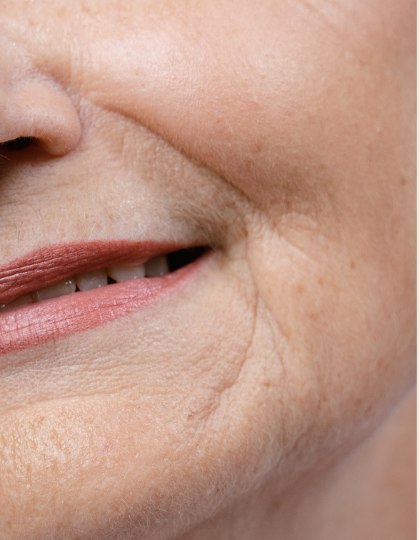
Skin aging is commonly perceived as wrinkles, sagging, pigmentation, and dryness. However, these visible changes represent only the final manifestations of much deeper biological alterations occurring within skin cells.
Human skin continuously experiences both intrinsic aging, driven primarily by genetics and metabolism, and extrinsic aging, resulting from ultraviolet radiation, environmental pollution, smoking, poor nutrition, and chronic psychological stress.9
At the cellular level, aging skin exhibits numerous hallmarks shared with other organs throughout the body, including:
- DNA damage accumulation
- Mitochondrial dysfunction
- Oxidative stress
- Cellular senescence
- Stem cell exhaustion
- Chronic low-grade inflammation ("inflammaging")
- Epigenetic alterations
- Declining extracellular matrix homeostasis
Collectively, these processes impair fibroblast function, reduce collagen and elastin synthesis, decrease hyaluronic acid production, and compromise epidermal barrier integrity, ultimately producing the visible characteristics associated with aged skin.10
Consequently, wrinkles should not be regarded as the primary problem. Rather, they are the clinical consequence of progressive cellular dysfunction.
Anti-aging versus Reverse Aging
Although the terms are often used interchangeably in commercial marketing, they represent distinct biological concepts.
| Anti-aging | Reverse Aging |
|---|---|
| Slows aging progression | Restores youthful cellular function |
| Targets symptoms | Targets biological causes |
| Reduces wrinkle formation | Reduces biological age |
| Improves skin appearance | Improves cellular resilience |
| Focuses on cosmetic outcomes | Focuses on regenerative mechanisms |
Modern longevity science increasingly recognizes that successful rejuvenation should not only improve appearance but also restore the molecular characteristics of youthful tissues. Such restoration may involve enhanced DNA repair, improved mitochondrial bioenergetics, increased NAD+ availability, reduced senescent cell burden, improved proteostasis, and remodeling of the extracellular matrix.2,6
Why This Matters for Cosmetic Science?
The cosmetic industry is entering a transformative era. Traditional product development has focused primarily on clinically observable endpoints such as wrinkle depth, skin elasticity, hydration, and pigmentation. While these remain important, contemporary research increasingly investigates biomarkers that reflect the biological health of skin itself.
Emerging studies now evaluate:
- NAD+ metabolism
- Cellular senescence markers (p16INK4a, p21, SA-β-gal)
- DNA repair capacity
- Mitochondrial membrane potential
- ATP production
- Oxidative stress biomarkers
- Epigenetic age
- Extracellular matrix remodeling
This transition reflects a broader movement toward Longevity Skincare, in which ingredients are selected not solely because they improve appearance, but because they target fundamental biological pathways associated with aging. Instead of asking: "Can this ingredient reduce wrinkles?"
Researchers increasingly ask: "Can this ingredient restore youthful cellular function?"
This subtle change in perspective is redefining the future of cosmetic innovation.
Looking Beyond Conventional Anti-aging Ingredients
Understanding the distinction between anti-aging and reverse aging provides a new framework for evaluating cosmetic active ingredients.
The next generation of skin longevity ingredients—including NAD+ precursors, senotherapeutics, mitochondrial activators, autophagy modulators, epigenetic regulators, extracellular matrix remodeling agents, and stem-cell-supporting compounds—is increasingly being investigated for its potential to promote genuine skin rejuvenation rather than simply delaying visible aging.
In the following articles of the Formulynx Ingredient Knowledge Series, we will explore these emerging classes of ingredients through the lens of modern aging biology and discuss how advances in geroscience are reshaping the future of skincare.
References
- Kassem, H.; et al. Emerging Rejuvenation Strategies—Reducing the Biological Age. Front. Aging 2021, 2, 790922. LINK
- de Magalhães, J. P. How Can Aging Be Reversed? Exploring Rejuvenation from a Damage-Based Perspective. Aging Cell 2022, 21, e13790. LINK
- López-Otín, C.; Blasco, M. A.; Partridge, L.; Serrano, M.; Kroemer, G. The Hallmarks of Aging. Cell 2013, 153, 1194–1217. LINK
- Campisi, J.; Kapahi, P.; Lithgow, G. J.; et al. From Discoveries in Ageing Research to Therapeutics for Healthy Ageing. Nature 2019, 571, 183–192.
- Ganceviciene, R.; Liakou, A. I.; Theodoridis, A.; et al. Skin Anti-Aging Strategies. Dermato-Endocrinology 2012, 4, 308–319. LINK
- López-Otín, C.; et al. Hallmarks of Aging: An Expanding Universe. Cell 2023, 186, 243–278. LINK
- Jylhävä, J.; Pedersen, N. L.; Hägg, S. Biological Age Predictors. EBioMedicine 2017, 21, 29–36. LINK
- Bell, C. G.; Lowe, R.; Adams, P. D.; et al. DNA Methylation Aging Clocks: Challenges and Recommendations. Genome Biology 2019, 20, 249. LINK
- Krutmann, J.; Bouloc, A.; Sore, G.; et al. The Skin Aging Exposome. J. Dermatol. Sci. 2017, 85, 152–161. LINK
- Li, Y.; et al. Skin Aging: Mechanisms, Evaluation, and Rejuvenation. Exploration 2026.